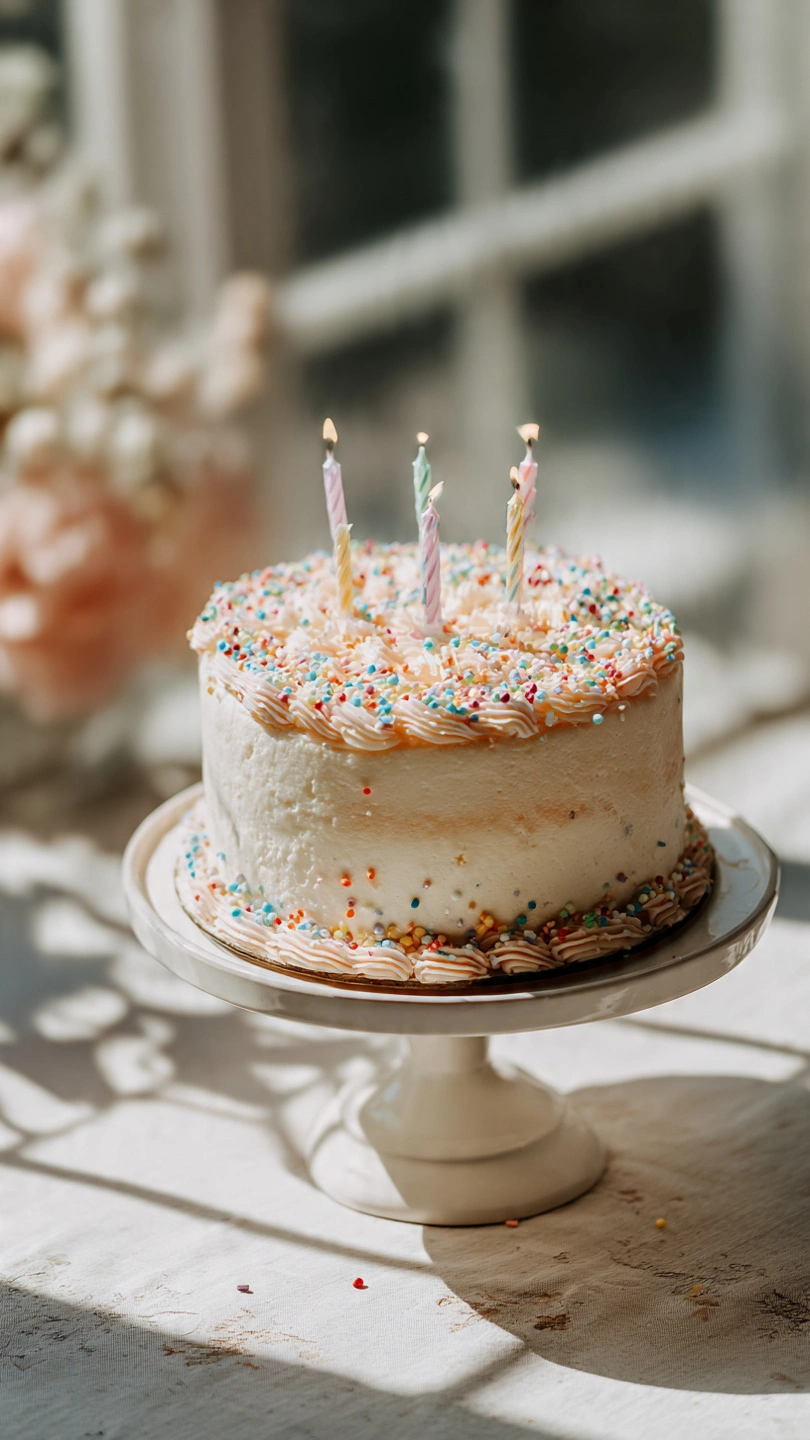
There’s something truly magical about a homemade birthday cake. This classic vanilla birthday cake with rich buttercream frosting is the kind of dessert that makes celebrations feel extra special. Whether you’re baking for your child’s first birthday, a milestone celebration, or just because someone you love deserves something sweet, this recipe delivers every single time.
What makes this birthday cake so irresistible? It starts with the incredibly moist, tender crumb that practically melts on your tongue. The cake itself has a delicate vanilla flavor with hints of butter and a subtle sweetness that’s never overwhelming. When you take that first bite, you’ll notice how light and fluffy the texture is—it’s the result of properly creamed butter and sugar creating thousands of tiny air pockets throughout the batter.
The aroma while this cake bakes is absolutely heavenly. Your kitchen will fill with the warm scent of vanilla and butter, and trust me, everyone in the house will come wandering in to ask when it’ll be ready. The golden-brown layers emerge from the oven with perfectly domed tops, and once you frost them with silky buttercream, you’ve got a showstopper that looks just as good as it tastes.
This isn’t just any birthday cake—it’s the birthday cake. The one that becomes your go-to recipe for years to come. The one people request by name. The one that makes birthdays feel like birthdays should: joyful, delicious, and absolutely worth celebrating.
Why You’ll Love This Recipe
- Foolproof and beginner-friendly – Clear instructions mean you’ll get perfect results even if you’re new to baking
- Incredibly moist texture – This cake stays soft and tender for days, never dry or crumbly
- Customizable for any celebration – Easy to adapt with different colors, flavors, and decorations
- Makes enough to feed a crowd – Two generous layers serve 12-16 people with plenty to go around
- Uses everyday ingredients – No specialty items required, just pantry staples you probably already have
- Tastes better than boxed mix – Homemade flavor that’s noticeably superior without being complicated
Ingredients Explained
Understanding what each ingredient does helps you bake with confidence and troubleshoot if needed.
All-purpose flour forms the structure of your cake. It contains just the right amount of protein to create a tender crumb without being too delicate. Make sure to measure it properly—spooning it into your measuring cup rather than scooping directly from the bag prevents you from accidentally adding too much, which would make your cake dense.
Granulated sugar does more than just sweeten. When creamed with butter, it creates air pockets that make your cake light and fluffy. It also helps keep the cake moist by attracting and holding onto water molecules during baking.
Butter is the foundation of both flavor and texture. Using real butter (not margarine) gives you that rich, authentic cake taste. It needs to be at room temperature—about 65-70°F—so it creams properly with the sugar. Cold butter won’t incorporate enough air, and melted butter will deflate your batter.
Eggs serve as the binding agent that holds everything together while also adding moisture and richness. They contribute to the cake’s structure and help it rise beautifully in the oven. Room temperature eggs mix more easily into your batter than cold ones.
Baking powder and baking soda are your leavening agents. The baking powder provides most of the lift, while a small amount of baking soda helps neutralize acids and contributes to browning. Together, they create that perfect rise and tender texture.
Milk adds moisture and helps create a smooth batter. Whole milk is ideal because the fat content contributes to a richer flavor and more tender crumb, but lower-fat milk will work in a pinch.
Vanilla extract is non-negotiable for birthday cake. Pure vanilla extract has a depth and complexity that imitation vanilla just can’t match. It enhances all the other flavors and gives your cake that classic taste everyone loves.
Step-by-Step Tips
Getting your ingredients to room temperature before you start makes a huge difference. Set out your butter, eggs, and milk about an hour before baking. Room temperature ingredients emulsify together more easily, creating a smoother batter with better texture.
When creaming butter and sugar, don’t rush this step. Beat them together for a full 3-5 minutes until the mixture is light, fluffy, and pale in color. This is when you’re incorporating air that will help your cake rise, so it’s worth the extra time. The mixture should look almost white and feel noticeably lighter.
Prepare your pans properly to avoid the heartbreak of a stuck cake. Grease them thoroughly with butter or baking spray, then line the bottoms with parchment paper circles. Grease the parchment too. This might seem like overkill, but it guarantees your cake layers will release cleanly every single time.
Mix your dry ingredients separately before adding them to the wet mixture. This ensures the baking powder and baking soda are evenly distributed throughout the flour, which means even rising without any bitter pockets. Whisk them together for at least 30 seconds.
Alternate adding dry ingredients and milk to your butter mixture, starting and ending with dry. Add about a third of the flour mixture, mix briefly, add half the milk, mix, then repeat. This method prevents overmixing and creates a more tender crumb. Mix just until you can’t see dry flour anymore—overmixing develops gluten and makes your cake tough.
Use a kitchen scale to divide batter evenly between pans if you have one. Equal amounts of batter mean your layers will bake at the same rate and be the same height, making frosting much easier.
Check for doneness a few minutes before the recipe time is up. Ovens vary, and you don’t want to overbake. The cake is done when a toothpick inserted in the center comes out with just a few moist crumbs (not wet batter) and the cake springs back when lightly pressed.
Let cakes cool in the pans for exactly 10 minutes before turning them out. This cooling time lets the structure set so the cake doesn’t fall apart, but if you wait too long, they’ll stick to the pans. After turning them out, let them cool completely on wire racks before frosting—warm cake will melt your buttercream.
Substitutions & Variations
Cake flour instead of all-purpose creates an even more tender, delicate crumb. Use 2¼ cups of cake flour in place of 2 cups all-purpose. The lower protein content makes for a softer texture, though all-purpose works beautifully.
Buttermilk instead of regular milk adds a slight tang and extra tenderness. The acidity reacts with the baking soda for a lighter texture. If using buttermilk, you can increase the baking soda slightly to ½ teaspoon.
Oil instead of butter makes the cake incredibly moist and helps it stay fresh longer. Use ¾ cup of neutral oil like vegetable or canola. The texture will be slightly different—more moist but less rich-tasting than butter.
Almond extract can replace half the vanilla for a subtle almond flavor that’s lovely for weddings or elegant celebrations. Just use ½ teaspoon almond extract and 1½ teaspoons vanilla.
Chocolate birthday cake is easy to create by replacing ½ cup of flour with ½ cup of unsweetened cocoa powder. You might need to add an extra 2-3 tablespoons of milk to compensate for the dryness of cocoa.
Funfetti version is as simple as folding in ½ cup of rainbow sprinkles at the very end of mixing. Make sure to use jimmies (the rod-shaped sprinkles) rather than nonpareils, which tend to bleed color into the batter.
Lemon or orange cake happens when you add 2 tablespoons of fresh citrus zest to your butter and sugar during creaming. The oils in the zest infuse the entire cake with bright flavor.
Different pan sizes can work, but adjust baking time accordingly. Three 6-inch pans will need about 25-30 minutes. A 9×13 sheet cake needs 30-35 minutes. Cupcakes take only 18-22 minutes.
Storage & Reheating
Unfrosted cake layers can be wrapped tightly in plastic wrap and stored at room temperature for up to 2 days. If you’re not frosting immediately, this is actually ideal—slightly aged cake is sturdier and easier to frost without tearing.
Fully frosted birthday cake keeps well at room temperature for up to 3 days if stored under a cake dome or in an airtight container. The buttercream acts as a protective barrier that keeps the cake moist. If your kitchen is particularly warm (above 75°F), refrigerate the cake to prevent the frosting from melting.
Refrigerated cake lasts up to a week when properly stored. Cover it with plastic wrap or keep it in an airtight cake carrier. The texture may firm up slightly in the fridge, but it’ll soften again once it comes to room temperature.
For the best texture, let refrigerated cake sit at room temperature for about an hour before serving. This allows the buttercream to soften and the flavors to come back to life. Cold cake is still delicious, but room temperature cake tastes richer and more flavorful.
Freezing cake is perfect for making ahead. Wrap unfrosted layers individually in plastic wrap, then aluminum foil, and freeze for up to 3 months. Thaw overnight in the refrigerator, still wrapped, then bring to room temperature before frosting.
Frosted cake can also be frozen, though it requires more careful handling. Freeze it uncovered until the frosting is solid (about an hour), then wrap carefully in plastic wrap and foil. Thaw in the refrigerator overnight, then unwrap and let it come to room temperature.
Individual slices freeze beautifully for future treats. Wrap each piece in plastic wrap, store in a freezer bag, and you’ve got birthday cake ready whenever a craving strikes. Thaw for about 30 minutes at room temperature.
Reheating isn’t usually necessary for cake, but if you want to refresh day-old cake, microwave individual slices for 10-15 seconds. This slight warming makes the cake taste freshly baked again and softens the frosting nicely.
Serving Ideas
Classic vanilla ice cream alongside birthday cake is a combination that never gets old. The cold, creamy ice cream melting into the soft cake creates an incredible contrast in temperature and texture.
Fresh berries—strawberries, raspberries, or blueberries—add a bright, fresh element that cuts through the richness of the buttercream. Scatter them around the plate or pile them on top of each slice for a beautiful presentation.
Cold milk is the traditional beverage pairing, especially for kids’ parties. For adults, coffee or espresso complements the sweetness perfectly, while champagne or sparkling wine makes the celebration feel extra fancy.
Whipped cream on the side gives guests an option to add extra richness. Some people love piling it high on their slice, while others prefer the pure buttercream experience.
Hot fudge or caramel sauce drizzled over each slice transforms this into an even more decadent dessert. Warm sauce against cold cake and frosting is absolutely divine.
A fruit compote made from simmered berries adds sophistication without overwhelming the cake. The slight tartness balances the sweetness beautifully.
For a birthday breakfast twist, serve slices with fresh fruit salad and yogurt. It’s indulgent but feels slightly virtuous with all that fruit on the plate.
FAQs
Can I make this cake ahead of time?
Absolutely! This is one of the best make-ahead cakes. Bake the layers up to 2 days in advance, wrap them well, and store at room temperature. You can also bake and freeze layers up to 3 months ahead. Frost the cake up to 2 days before your event and refrigerate it—just remember to bring it to room temperature before serving for the best flavor and texture.
Why did my cake turn out dense instead of fluffy?
Dense cake usually happens from overmixing after adding flour, using too much flour (which can occur if you scoop directly from the bag), or not creaming the butter and sugar long enough. Make sure your butter is truly at room temperature, cream it with sugar for a full 3-5 minutes, measure flour by spooning it into your measuring cup, and mix the final batter just until combined. Old baking powder can also be the culprit—if yours is over 6 months old, replace it.
Can I use this recipe to make cupcakes?
Yes! This batter makes about 24 regular-sized cupcakes. Fill cupcake liners about two-thirds full and bake at 350°F for 18-22 minutes, until a toothpick comes out clean. Start checking at 18 minutes since cupcakes bake faster than cake layers. They’re done when they spring back when lightly touched.
How do I get flat cake layers instead of domed tops?
Baking at a slightly lower temperature (325°F instead of 350°F) and using cake strips (wet fabric strips wrapped around the pan) helps cakes bake more evenly. However, slight doming is normal and actually makes frosting easier since you can trim the domes to create flat layers. A serrated knife or cake leveler makes quick work of trimming.
What’s the best way to frost a birthday cake smoothly?
Start with completely cool cake layers—warm cake will melt your frosting. Apply a thin “crumb coat” of frosting all over the cake and refrigerate for 15-30 minutes until firm. This seals in all the crumbs. Then apply your final coat of frosting, using an offset spatula to spread it smoothly. A bench scraper or cake smoother helps achieve those bakery-smooth sides. For an even easier finish, embrace the rustic look with textured swirls.
My cake stuck to the pan. How do I prevent this?
The foolproof method is to grease the pan with butter or baking spray, line the bottom with parchment paper cut to fit, then grease the parchment too. Let cakes cool in the pan for exactly 10 minutes—not more, not less—before inverting onto a wire rack. Run a knife around the edges before inverting to help release any stuck spots. If a cake does stick, don’t panic—you can patch it together with frosting and no one will ever know!
Print
The Ultimate Homemade Birthday Cake
- Total Time: 1 hour 50 minutes
- Yield: 12-16 servings 1x
- Diet: Vegetarian
Description
This classic vanilla birthday cake is incredibly moist, fluffy, and perfectly sweet. With two tender layers and rich buttercream frosting, it’s the showstopper dessert that makes every celebration special. Easy enough for beginners but impressive enough for any occasion!
Ingredients
For the Cake:
- 2 cups all-purpose flour
- 1½ cups granulated sugar
- ¾ cup unsalted butter, room temperature
- 3 large eggs, room temperature
- 2½ teaspoons baking powder
- ½ teaspoon baking soda
- ½ teaspoon salt
- 1 cup whole milk, room temperature
- 2 teaspoons pure vanilla extract
For the Buttercream Frosting:
- 1½ cups unsalted butter, room temperature
- 5–6 cups powdered sugar
- ¼ cup heavy cream or milk
- 2 teaspoons pure vanilla extract
- Pinch of salt
- Food coloring (optional)
- Rainbow sprinkles for decoration
Instructions
For the Cake:
- Preheat oven to 350°F (175°C). Grease two 9-inch round cake pans, line with parchment paper, and grease again.
- In a medium bowl, whisk together flour, baking powder, baking soda, and salt. Set aside.
- In a large bowl, beat butter and sugar with an electric mixer for 3-5 minutes until light and fluffy.
- Add eggs one at a time, beating well after each addition. Mix in vanilla extract.
- Alternately add the flour mixture and milk to the butter mixture in three additions, starting and ending with flour. Mix just until combined after each addition.
- Divide batter evenly between prepared pans. Tap pans on counter to release air bubbles.
- Bake for 28-32 minutes, until a toothpick inserted in the center comes out with just a few moist crumbs.
- Cool in pans for 10 minutes, then turn out onto wire racks to cool completely.
For the Buttercream: 9. Beat butter for 2-3 minutes until creamy and pale. 10. Gradually add powdered sugar, one cup at a time, beating on low speed. 11. Add vanilla, salt, and heavy cream. Beat on high for 3-4 minutes until light and fluffy. 12. Add food coloring if desired.
Assembly: 13. Place one cake layer on serving plate. Spread with 1 cup of frosting. 14. Top with second layer. Apply thin crumb coat and refrigerate 15 minutes. 15. Frost entire cake with remaining buttercream. Decorate with sprinkles.
Notes
- All ingredients should be at room temperature for best results
- Cake layers can be baked ahead and frozen for up to 3 months
- For even layers, weigh your batter when dividing between pans
- If frosting is too thick, add more cream; if too thin, add more powdered sugar
- Cake stays moist at room temperature for up to 3 days when covered
- For chocolate version, replace ½ cup flour with ½ cup cocoa powder
- Use jimmies (rod-shaped sprinkles) rather than nonpareils to prevent color bleeding
- Prep Time: 20 minutes
- Cook Time: 30 minutes
- Category: Dessert
- Method: Baking
- Cuisine: American
Nutrition
- Serving Size: 1 slice (1/14 of cake)
- Calories: 520 kcal
- Sugar: 58g
- Sodium: 240mg
- Fat: 26g
- Saturated Fat: 16g
- Unsaturated Fat: 8g
- Trans Fat: 0g
- Carbohydrates: 68g
- Fiber: 0.5g
- Protein: 4g
- Cholesterol: 95mg