There’s something magical about biting into a perfectly ripe strawberry—that burst of sweet-tart juice, the delicate floral aroma, and the way the tender flesh practically melts on your tongue. Fresh strawberry recipes celebrate this beloved berry at its peak, transforming simple ingredients into show-stopping desserts, breakfasts, and treats that taste like pure sunshine. Whether you’re looking for a quick weeknight dessert, an impressive brunch centerpiece, or a refreshing summer snack, fresh strawberries deliver every single time.
What makes strawberry recipes so special is their incredible versatility. These ruby-red gems shine in everything from no-bake desserts and fluffy pancakes to creamy smoothies and elegant tarts. They require minimal prep—just a quick rinse and hull—and their natural sweetness means you often need less added sugar than other fruit-based recipes. Plus, strawberries pair beautifully with cream, chocolate, vanilla, lemon, and even savory ingredients like balsamic vinegar and fresh basil.
The best part? Fresh strawberry recipes are naturally crowd-pleasing. Kids love them for their sweetness and vibrant color, while adults appreciate their sophisticated flavor potential. They’re perfect for spring and summer entertaining, holiday gatherings, or simply treating yourself on a Tuesday afternoon. When strawberries are in season, they’re affordable, abundantly available, and bursting with flavor that frozen berries simply can’t match. The aroma alone—sweet, slightly floral, with hints of honey—will have everyone rushing to the kitchen before you’ve even finished preparing your dish.
Why You’ll Love This Recipe
- Incredibly easy to make with minimal hands-on time and no complicated techniques required
- Showcases fresh strawberries at their absolute best, letting their natural flavor shine through
- Naturally beautiful presentation that looks impressive without any fancy decorating skills
- Perfect for any occasion from casual family dinners to special celebrations and potlucks
- Uses simple, everyday ingredients you probably already have in your kitchen
- Adaptable to dietary needs with easy swaps for dairy-free, gluten-free, or lower-sugar versions
Ingredients Explained
Understanding why each ingredient matters helps you make smarter substitutions and achieve better results every time you cook.
Fresh strawberries are obviously the star here, and quality matters tremendously. Look for berries that are bright red all the way to the stem, firm to the touch, and fragrant. Avoid any with white shoulders (underripe) or mushy spots. Local, in-season strawberries will always taste better than off-season imports. The natural pectin in strawberries helps thicken sauces and fillings without adding cornstarch, while their acidity balances sweetness perfectly.
Granulated sugar doesn’t just add sweetness—it helps draw out the strawberries’ natural juices through osmosis, creating a beautiful syrup. It also helps preserve texture in baked applications and balances the berries’ tartness. The amount of sugar you need depends entirely on how sweet your strawberries are naturally, so always taste as you go.
Vanilla extract amplifies the strawberries’ natural flavor compounds and adds warmth and depth. Real vanilla extract makes a noticeable difference here compared to imitation vanilla. Just a small amount transforms the entire dish from good to unforgettable.
Lemon juice is the secret weapon in strawberry recipes. Its acidity brightens the flavor, prevents the berries from tasting flat or one-dimensional, and helps preserve their gorgeous red color. It also balances sweetness and enhances the strawberries’ natural tartness.
Salt might seem odd in a sweet recipe, but a tiny pinch amplifies all the other flavors and makes the strawberries taste more intensely like themselves. It reduces bitterness and rounds out the overall flavor profile.
Heavy cream or dairy products provide richness and a luxurious mouthfeel that contrasts beautifully with the bright, fresh berries. The fat content helps carry flavor and creates a satisfying, indulgent texture.
Step-by-Step Tips
Preparing your strawberries properly makes all the difference. Always rinse berries before hulling them—if you remove the stems first, water seeps inside and dilutes their flavor. Pat them completely dry with paper towels or a clean kitchen towel before using. For the most even pieces, hull strawberries with a paring knife or strawberry huller, then slice them vertically from top to bottom rather than crosswise.
Macerating strawberries (tossing them with sugar and letting them sit) is a game-changer for most recipes. This simple technique draws out the berries’ natural juices, creating a delicious syrup while intensifying their flavor. Let them sit for at least 15-30 minutes at room temperature, stirring occasionally. The longer they macerate, the softer they become and the more syrup you’ll have.
Temperature matters more than you might think. Cold strawberries don’t release their aroma as readily, so let them come to room temperature before serving for maximum flavor impact. However, if you’re folding them into whipped cream or other cold mixtures, keep them chilled to prevent everything from becoming soupy.
Don’t overmix when combining strawberries with creamy elements like whipped cream, yogurt, or custard. Gentle folding preserves the berries’ texture and prevents everything from turning pink and mushy. Use a rubber spatula and fold from the bottom up in smooth, deliberate motions.
Taste and adjust before serving. Strawberries vary wildly in sweetness depending on the season, variety, and growing conditions. What worked perfectly last time might need more sugar or lemon juice this time. Always taste your mixture and adjust the sweetness and acidity to your preference.
Work quickly once berries are cut because their cut surfaces oxidize and release juice rapidly. If you’re not using them immediately, toss cut strawberries with a little lemon juice to slow browning and flavor loss.
Substitutions & Variations
For different berries: You can substitute or combine strawberries with other berries like raspberries, blueberries, or blackberries. Keep in mind that other berries have different sweetness levels and liquid content, so you may need to adjust sugar and thickeners accordingly. Mixed berry versions are gorgeous and add complexity to the flavor.
Sweetener alternatives: Replace granulated sugar with honey, maple syrup, or agave nectar for a different flavor profile, but use about 25% less since liquid sweeteners taste sweeter. Coconut sugar or brown sugar adds a subtle caramel note that’s lovely with strawberries. For sugar-free versions, try monk fruit sweetener or erythritol, though the texture may be slightly different.
Dairy-free options: Swap heavy cream with full-fat coconut cream (refrigerate the can overnight and scoop out the thick cream on top), cashew cream, or oat-based creaming alternatives. Use dairy-free yogurt or cream cheese in cheesecake-style recipes. The results are remarkably similar to traditional versions.
Flavor variations: Add a tablespoon of balsamic vinegar to macerated strawberries for a sophisticated, complex sweetness. Fresh herbs like basil, mint, or thyme pair beautifully with strawberries—just muddle a few leaves with the berries. A splash of orange juice or a bit of orange zest adds brightness. For adult versions, add a tablespoon of liqueur like Grand Marnier, amaretto, or rum.
Texture modifications: For a smoother consistency, puree half the strawberries and fold them into the whole berries for a combination of textures. For crunchier elements, add toasted nuts, granola, or cookie crumbles. For a more elegant presentation, keep berries in larger pieces or serve them whole.
Gluten-free adaptations: Most strawberry recipes are naturally gluten-free or easily adapted by using gluten-free flour blends, almond flour, or oat flour in any baked components. Always check that extracts and other flavorings are certified gluten-free if you’re cooking for someone with celiac disease.
Storage & Reheating
Refrigerator storage: Most fresh strawberry desserts and treats should be stored in an airtight container in the refrigerator for up to 2-3 days. Keep in mind that strawberries release more liquid as they sit, so the texture will soften over time. For best results, store any creamy components separately from the berries if possible and combine them just before serving.
Freezer storage: While fresh strawberry dishes are best enjoyed fresh, you can freeze most preparations for up to 3 months. Macerated strawberries freeze particularly well—portion them into freezer bags or containers, removing as much air as possible. Pureed strawberry sauces also freeze beautifully. Thaw overnight in the refrigerator before using. Note that previously frozen strawberries will be softer and release more liquid than fresh ones.
What doesn’t freeze well: Recipes with whipped cream or fresh cream-based components don’t freeze successfully as the cream will separate and become grainy when thawed. Whole fresh strawberries lose their texture when frozen and thawed, becoming mushy (though they’re fine for smoothies or cooking).
Reheating considerations: Most strawberry recipes are served cold or at room temperature and don’t require reheating. If you’ve made a warm strawberry compote or sauce, gently rewarm it over low heat on the stovetop, stirring frequently to prevent scorching. Microwave reheating works in a pinch—use 50% power and heat in 30-second intervals, stirring between each, until just warmed through.
Preventing sogginess: If your recipe has crispy or crunchy elements like shortcake, cookies, or crust, store them separately from the berries and assemble just before serving. This prevents everything from becoming soggy. Alternatively, create a barrier by brushing the base with melted white chocolate before adding berries.
Extending freshness: If you notice your strawberry mixture becoming too watery after a day or two, drain off some of the excess liquid (save it for cocktails or drizzling over ice cream). You can also refresh the dish by stirring in a few freshly sliced strawberries to add back texture and bright flavor.
Serving Ideas
Classic pairings: Fresh strawberry recipes shine alongside fluffy whipped cream, vanilla ice cream, or a dollop of mascarpone cheese. For breakfast versions, serve with crispy bacon, buttery croissants, or a stack of fluffy pancakes. The sweet-savory combination is absolutely divine.
Beverage pairings: Pair strawberry desserts with sparkling wine, prosecco, or champagne for an elegant touch. For non-alcoholic options, try sparkling lemonade, iced tea, or a strawberry-infused water. Coffee and strawberries are surprisingly wonderful together—the bitterness of espresso cuts through the sweetness beautifully.
Complementary desserts: Serve strawberry creations as part of a dessert board with chocolate truffles, lemon bars, and shortbread cookies. The variety of flavors and textures makes for an impressive spread. Strawberries also pair perfectly with angel food cake, pound cake, or vanilla panna cotta.
Brunch spreads: Fresh strawberry dishes are brunch superstars. Serve them alongside quiche, frittatas, breakfast casseroles, or a bagel bar. Add a cheese board with brie, goat cheese, and aged cheddar for a sophisticated touch. Don’t forget fresh orange juice or mimosas to complete the experience.
Toppings and garnishes: Elevate your presentation with fresh mint leaves, edible flowers, lemon zest curls, or a dusting of powdered sugar. Toasted coconut flakes, chopped pistachios, or slivered almonds add wonderful crunch and visual interest. A drizzle of honey or chocolate sauce never hurts either.
Seasonal variations: In summer, serve strawberry recipes at outdoor gatherings with grilled meats, fresh salads, and corn on the cob. In spring, pair them with Easter brunch items like ham, deviled eggs, and hot cross buns. They’re also perfect for Mother’s Day, graduations, and baby showers.
FAQs
How do I choose the best strawberries for recipes?
Look for strawberries that are uniformly red without white or green shoulders, firm but not hard, and have fresh green caps. The most important indicator is smell—ripe strawberries should have a sweet, fragrant aroma even before you pick them up. Avoid berries that are mushy, have dark spots, or smell fermented. Smaller berries are often sweeter and more flavorful than giant ones. If possible, buy local strawberries during peak season (late spring to early summer) for the absolute best flavor.
Can I use frozen strawberries instead of fresh?
You can, but the results will be different. Frozen strawberries work well in cooked applications like compotes, sauces, smoothies, and baked goods where texture isn’t critical. However, they release significantly more liquid as they thaw and become very soft, making them unsuitable for fresh applications where you want firm, pretty berry slices. If using frozen berries, don’t thaw them first for baked goods—add them frozen to prevent excessive moisture. For other recipes, thaw them completely and drain off the excess liquid before using.
Why do my strawberries taste bland or watery?
This usually happens with out-of-season strawberries that were picked underripe and shipped long distances. To improve bland berries, macerate them with sugar and a squeeze of lemon juice for at least 30 minutes—this concentrates their flavor. You can also roast them in a 350°F oven for 15-20 minutes to intensify their sweetness. Adding a pinch of salt and a splash of vanilla extract or balsamic vinegar can also help wake up the flavor.
How far in advance can I prepare strawberry recipes?
It depends on the specific recipe. Macerated strawberries are actually better made 2-4 hours ahead so the flavors can develop, and they’ll keep well in the fridge for up to 2 days. However, assembled desserts with cream or cake components should generally be put together within a few hours of serving to prevent sogginess. You can prep individual components a day ahead—slice berries, make whipped cream, bake cake layers—and assemble just before serving for the best texture.
What’s the best way to hull strawberries?
The easiest method is using a small paring knife to cut around the green cap in a circular motion, removing just the stem and white core while wasting minimal fruit. Strawberry hullers (those claw-like gadgets) work well too. In a pinch, you can push a wide plastic straw up through the bottom of the berry to pop out the core. Avoid cutting off the entire top of the strawberry with a straight slice—you’ll waste a lot of perfectly good fruit.
Can I make strawberry recipes healthier?
Absolutely! Reduce the sugar by half and let the natural sweetness shine through, especially with ripe, in-season berries. Replace heavy cream with Greek yogurt, cottage cheese, or coconut cream for added protein and less fat. Use whole grain flours in baked components, add chia seeds or ground flaxseed for extra fiber and omega-3s, or incorporate oats for heart-healthy whole grains. Strawberries are naturally low in calories and high in vitamin C, fiber, and antioxidants, so they’re already a nutritious choice that you can feel good about enjoying.
Print
Fresh Strawberry Shortcake Recipe
- Total Time: 35 minutes (plus 30 minutes macerating time)
- Yield: 35 minutes (plus 30 minutes macerating time) 1x
- Diet: Vegetarian
Description
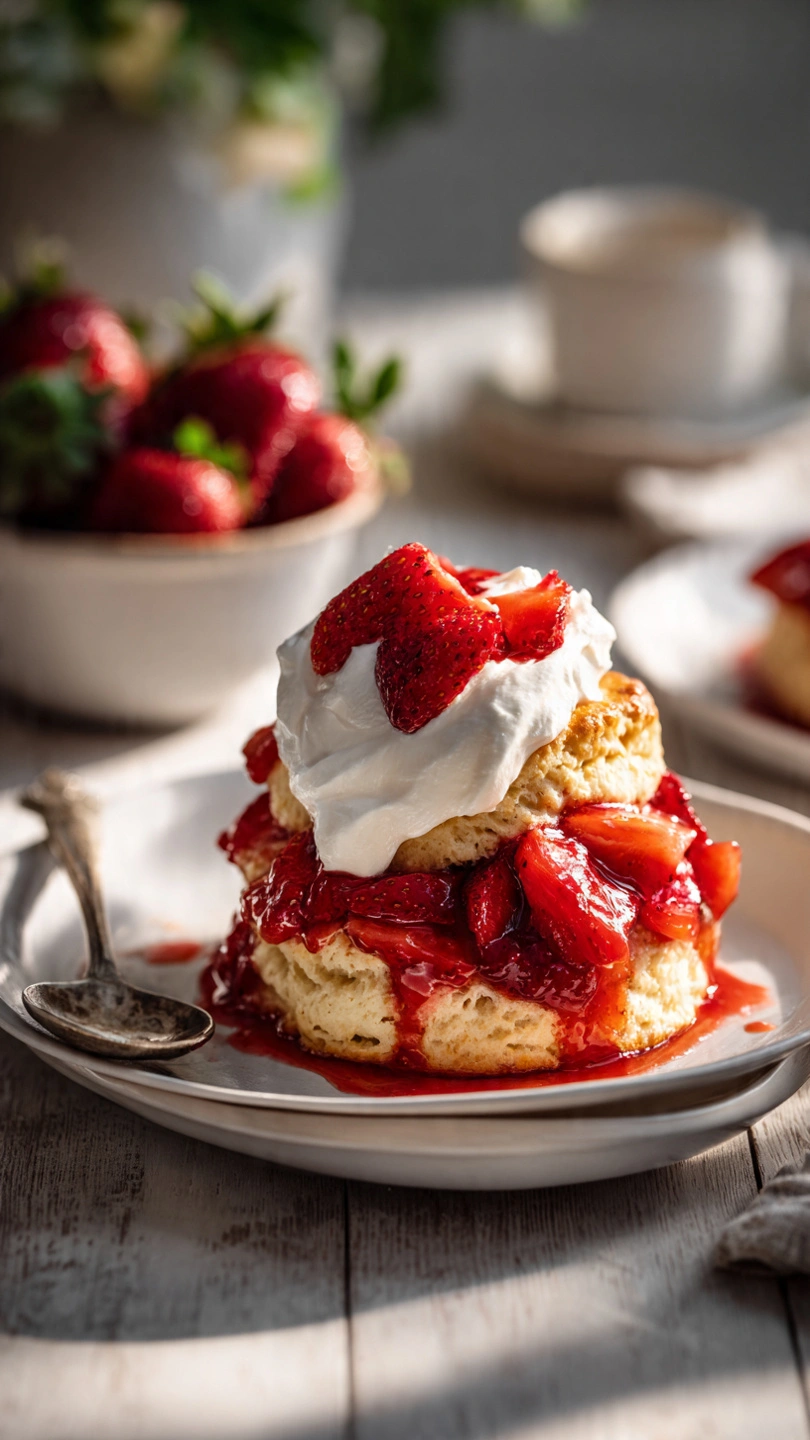
This classic Fresh Strawberry Shortcake features tender, buttery biscuits layered with sweet macerated strawberries and fluffy whipped cream. It’s the ultimate spring and summer dessert that highlights perfectly ripe strawberries in all their glory.
Ingredients
For the Strawberries:
- 2 pounds fresh strawberries, hulled and sliced
- 1/4 cup granulated sugar
- 1 tablespoon fresh lemon juice
- 1/2 teaspoon vanilla extract
For the Shortcakes:
- 2 cups all-purpose flour
- 1/4 cup granulated sugar
- 1 tablespoon baking powder
- 1/2 teaspoon salt
- 1/2 cup (1 stick) cold unsalted butter, cubed
- 3/4 cup heavy cream, plus more for brushing
- 1 large egg
- 1 teaspoon vanilla extract
- 2 tablespoons coarse sugar (for topping)
For the Whipped Cream:
- 1 1/2 cups heavy whipping cream, cold
- 3 tablespoons powdered sugar
- 1 teaspoon vanilla extract
Instructions
Prepare the Strawberries:
- In a large bowl, combine sliced strawberries, sugar, lemon juice, and vanilla extract. Toss gently to coat.
- Let strawberries macerate at room temperature for 30 minutes to 2 hours, stirring occasionally, until they release their juices and create a syrup.
Make the Shortcakes:
- Preheat oven to 425°F (220°C). Line a baking sheet with parchment paper.
- In a large bowl, whisk together flour, sugar, baking powder, and salt.
- Add cold butter cubes and use a pastry cutter or your fingers to work the butter into the flour until the mixture resembles coarse crumbs with pea-sized pieces of butter remaining.
- In a small bowl, whisk together heavy cream, egg, and vanilla extract.
- Pour the wet ingredients into the dry ingredients and stir with a fork until just combined. Do not overmix; the dough should be slightly shaggy.
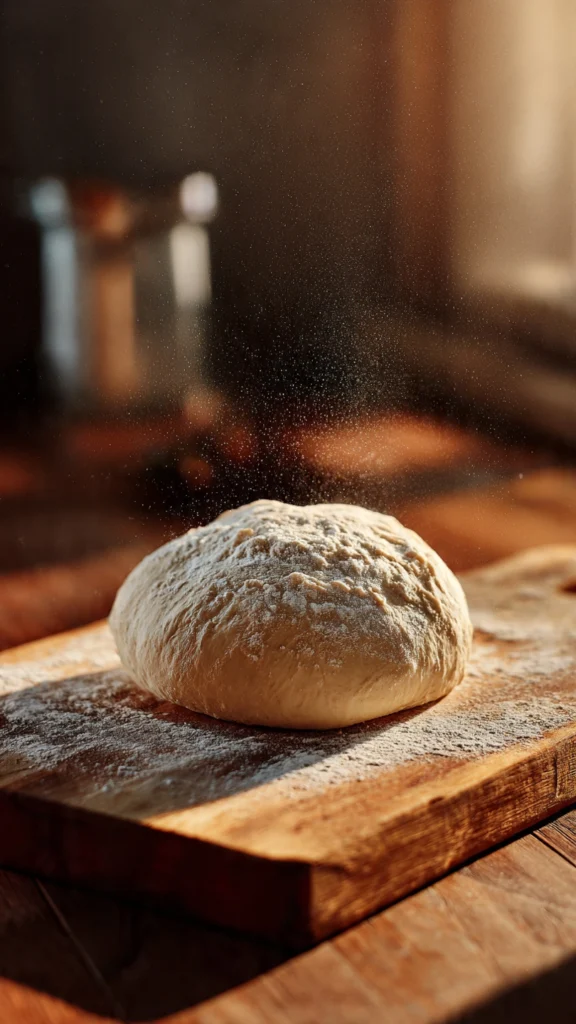
- Turn dough out onto a lightly floured surface and gently pat into a 1-inch thick rectangle.
- Use a 3-inch round biscuit cutter to cut out 6-8 shortcakes, pressing straight down without twisting. Gather scraps, pat out gently, and cut remaining biscuits.
- Place shortcakes on prepared baking sheet, spacing them 2 inches apart. Brush tops with heavy cream and sprinkle with coarse sugar.
- Bake for 12-15 minutes, until golden brown on top and cooked through. Transfer to a wire rack to cool slightly.
Make the Whipped Cream:
- In a large bowl or stand mixer, beat cold heavy cream, powdered sugar, and vanilla extract on medium-high speed until soft peaks form, about 2-3 minutes. Do not overbeat.
Assemble:
- Split each warm or room-temperature shortcake in half horizontally.
- Place bottom half on a plate, spoon generous amount of macerated strawberries and their juices over it, add a dollop of whipped cream.
- Top with the other half of the shortcake, more strawberries, and another dollop of whipped cream.
- Serve immediately while shortcakes are fresh.
Notes
- Make-ahead tip: You can prepare the shortcake dough, cut the biscuits, and freeze them unbaked for up to 1 month. Bake from frozen, adding 2-3 extra minutes to the baking time.
- Strawberry sweetness: Adjust the sugar in the macerated strawberries based on how sweet your berries are. Taste and add more if needed.
- Butter temperature: Keep your butter very cold for the flakiest shortcakes. You can even freeze the cubed butter for 10 minutes before using.
- Don’t twist the cutter: Press the biscuit cutter straight down and pull straight up to allow the shortcakes to rise evenly.
- Whipped cream: Make sure your cream and bowl are very cold for the best results. You can chill the bowl in the freezer for 10 minutes before whipping.
- Storage: Store components separately. Baked shortcakes keep at room temperature for 1 day or refrigerated for 3 days. Rewarm briefly before serving. Macerated strawberries keep refrigerated for 2-3 days. Whipped cream keeps refrigerated for up to 1 day (re-whip briefly if needed).
- Prep Time: 20 minutes
- Cook Time: 15 minutes
- Category: Dessert
- Method: Baking
- Cuisine: American
Nutrition
- Serving Size: 1 shortcake with strawberries and cream
- Calories: 425
- Sugar: 24g
- Sodium: 285mg
- Fat: 26g
- Saturated Fat: 16g
- Unsaturated Fat: 8g
- Trans Fat: 0g
- Carbohydrates: 44g
- Fiber: 3g
- Protein: 5g
- Cholesterol: 95mg