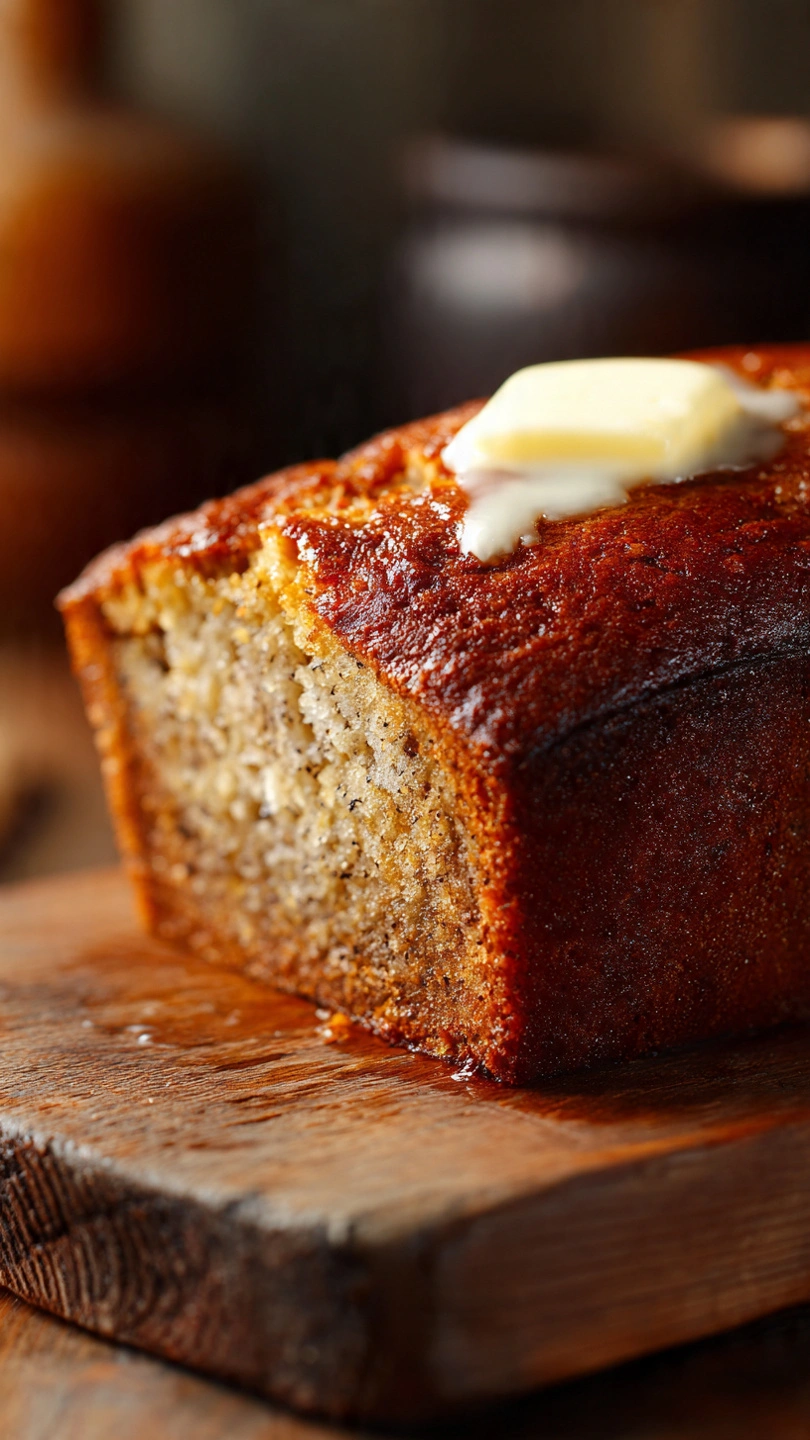
There’s something magical about the aroma of banana bread baking in the oven—that sweet, warm scent that fills your entire home and makes everyone come running to the kitchen. This classic banana bread recipe is the perfect way to use up those overripe bananas sitting on your counter, transforming them into a moist, tender loaf that’s equally delicious for breakfast, as an afternoon snack, or even as a simple dessert.
What makes this banana bread truly special is its incredible texture—supremely moist without being dense, with a perfectly golden crust that gives way to a soft, fluffy interior studded throughout with sweet banana flavor. Each bite melts in your mouth with notes of vanilla and a subtle hint of cinnamon warmth. Unlike some banana breads that can be dry or heavy, this recipe strikes the perfect balance, staying fresh and delicious for days.
Whether you’re a seasoned baker or just starting out, this recipe is wonderfully forgiving and comes together in one bowl with simple pantry ingredients. It’s the kind of recipe that becomes a family favorite—the one you’ll turn to again and again for potlucks, bake sales, weekend brunches, or just because you’re craving something homemade and comforting. You can enjoy it plain, slather it with butter, or dress it up with your favorite add-ins. No matter how you serve it, this banana bread delivers pure, nostalgic comfort in every slice.
Why You’ll Love This Recipe
- Uses simple pantry staples you probably already have on hand—no special ingredients or trips to the store required.
- Foolproof and beginner-friendly with straightforward steps that guarantee success every single time, even if you’re new to baking.
- Incredibly moist and flavorful thanks to perfectly ripe bananas that create natural sweetness and tender texture throughout.
- Stays fresh for days when stored properly, actually getting even more moist and flavorful as it sits.
- Endlessly customizable so you can add nuts, chocolate chips, or spices to make it your own signature version.
- Perfect for meal prep since one loaf gives you breakfast or snacks for the entire week.
Ingredients Explained
Understanding why each ingredient matters will help you become a better baker and know what you can adjust based on your preferences or what’s in your pantry.
Overripe bananas are the star of the show and the secret to incredible banana bread. The riper your bananas, the sweeter and more flavorful your bread will be. Those brown-speckled or even completely brown bananas you might think are past their prime are actually perfect—they’re softer, easier to mash, and packed with concentrated sweetness. The natural sugars in overripe bananas have fully developed, which means you get maximum banana flavor without needing extra sugar.
All-purpose flour provides the structure that holds everything together. It creates just enough gluten when mixed to give the bread body, but not so much that it becomes tough or chewy. The moderate protein content in all-purpose flour is ideal for quick breads like this.
Sugar does more than just sweeten the bread. It helps create that beautiful golden-brown crust, keeps the bread moist by attracting and holding onto water molecules, and contributes to the tender crumb texture. The combination of granulated sugar with the natural sugars from bananas creates complex sweetness that’s perfectly balanced.
Butter adds richness, flavor, and moisture. When creamed with sugar, it also incorporates tiny air pockets that help create a lighter texture. Using melted butter instead of softened makes this a one-bowl recipe that’s easier and faster, while still delivering that buttery flavor we all love.
Eggs serve as the binding agent that holds all the ingredients together while also adding moisture and richness. They help create structure as the bread bakes and contribute to that tender, cake-like crumb.
Baking soda is the leavening agent that makes the bread rise and become fluffy rather than dense. It reacts with the natural acidity in bananas to create carbon dioxide bubbles that lift the batter as it bakes. This chemical reaction also helps neutralize some of the acidity and enhances browning.
Vanilla extract amplifies all the other flavors and adds a warm, sweet aroma that makes banana bread irresistible. It’s a small amount but makes a noticeable difference in the overall flavor profile.
Salt might seem like an odd addition to something sweet, but it’s crucial for balancing flavors and preventing the bread from tasting flat or one-dimensional. It enhances the sweetness and brings out the banana flavor more prominently.
Step-by-Step Tips
Getting perfect banana bread every time is all about a few key techniques that make a real difference in the final result.
Don’t overmix the batter once you add the flour. Stir just until you can’t see any more dry flour streaks—usually about 30 seconds of gentle folding. Overmixing develops too much gluten, which creates a tough, dense loaf with tunnels running through it instead of a tender, even crumb. It’s totally fine if the batter looks a little lumpy.
Use bananas that are truly overripe with lots of brown spots or even completely black peels. If your bananas aren’t quite ripe enough, you can speed up the process by placing them in a paper bag for a day or two, or roast them in their peels at 300°F for about 15 minutes until the skins turn black and the fruit inside is soft and fragrant.
Measure your flour correctly to avoid dry, dense bread. The best method is to spoon flour into your measuring cup and level it off with a knife rather than scooping directly from the bag, which packs it down and can add up to 25% more flour than needed. Better yet, use a kitchen scale for precision.
Test for doneness properly since oven temperatures vary. Insert a toothpick or thin knife into the center of the loaf—it should come out with just a few moist crumbs clinging to it, not wet batter. The top should be deep golden brown and spring back when lightly pressed. If the top is browning too quickly but the center isn’t done, tent it loosely with aluminum foil for the last 15 minutes of baking.
Let the bread cool in the pan for at least 10 to 15 minutes before turning it out onto a wire rack. This cooling period allows the structure to set so the bread doesn’t fall apart when you remove it. Trying to slice it while it’s still hot will result in gummy, squished pieces, so wait until it’s at least lukewarm for the best texture.
Line your pan with parchment paper for the easiest removal. Cut a strip that covers the bottom and comes up two sides, leaving an overhang that you can use as handles to lift the whole loaf out effortlessly.
Substitutions & Variations
One of the best things about banana bread is how adaptable it is to different dietary needs and flavor preferences.
For the bananas, you’ll need the equivalent of about three medium bananas or roughly one and a half cups of mashed banana. In a pinch, you can substitute unsweetened applesauce for up to half the bananas, though you’ll lose some of that signature banana flavor.
Swap all-purpose flour for whole wheat flour if you want a heartier, more nutritious loaf. Use half all-purpose and half whole wheat for your first attempt, as 100% whole wheat can make the bread quite dense. You can also use a gluten-free flour blend in equal amounts, though the texture will be slightly different.
Reduce the sugar by up to a third if you prefer less sweetness or if your bananas are extremely ripe and very sweet. You can also substitute brown sugar for granulated sugar to add deeper, molasses notes and extra moisture, or use honey or maple syrup for about three-quarters of the sugar amount.
Use oil instead of butter for an even moister bread that stays soft longer. Vegetable oil, coconut oil, or even olive oil (for a subtle fruity note) work beautifully. The bread won’t have quite the same rich, buttery flavor, but it will be incredibly tender and perfect for anyone avoiding dairy.
Make it vegan by replacing eggs with flax eggs (one tablespoon ground flaxseed mixed with three tablespoons water per egg, let sit for five minutes) and using coconut oil or vegetable oil instead of butter. The texture will be slightly different but still delicious.
Add mix-ins to customize your loaf. Fold in a half to three-quarters cup of chocolate chips, chopped walnuts, pecans, or a combination. You can also add a teaspoon of cinnamon, half a teaspoon of nutmeg, or a quarter teaspoon of cardamom for warm spice notes. Dried fruit like raisins or cranberries, shredded coconut, or even a swirl of Nutella or peanut butter are all fantastic additions.
Make it extra special by creating a cinnamon swirl. Reserve a quarter cup of batter mixed with cinnamon and sugar, then swirl it through the main batter with a knife before baking. Or top the unbaked loaf with a streusel topping made from butter, flour, sugar, and cinnamon for a bakery-style finish.
Adjust the size by making muffins instead of a loaf. Fill muffin cups two-thirds full and bake at the same temperature for 18 to 22 minutes. You can also make mini loaves, which take about 35 to 40 minutes and make wonderful gifts.
Storage & Reheating
Proper storage keeps your banana bread tasting fresh and moist for as long as possible.
At room temperature, wrap the completely cooled loaf tightly in plastic wrap or aluminum foil, or store it in an airtight container. It will stay fresh and delicious for up to four days on your counter. Many people find that banana bread actually tastes even better on the second day as the flavors meld together and the moisture distributes evenly throughout.
In the refrigerator, wrapped banana bread will last up to a week, though refrigeration can sometimes dry it out slightly. If you go this route, let slices come to room temperature before eating, or warm them briefly to restore that fresh-baked texture.
For longer storage, banana bread freezes beautifully for up to three months. Wrap the entire loaf or individual slices tightly in plastic wrap, then place in a freezer-safe zip-top bag, pressing out as much air as possible. Label with the date so you remember when you froze it. You can also wrap slices individually in plastic wrap before freezing, which makes it easy to grab just one or two pieces whenever a craving hits.
To thaw frozen banana bread, leave it wrapped at room temperature for two to three hours, or overnight in the refrigerator. Individual slices will thaw in about an hour at room temperature or can go straight from freezer to toaster.
Reheating brings back that fresh-from-the-oven warmth and makes the bread taste amazing. For individual slices, use a toaster on a low setting for about one minute, or microwave for 10 to 15 seconds. For a whole loaf, wrap it in foil and warm in a 300°F oven for 10 to 15 minutes. The gentle heat refreshes the texture and makes the bread taste like it just came out of the oven.
Revive slightly stale bread by brushing slices lightly with melted butter and toasting them in a skillet or under the broiler for a minute or two. This creates crispy edges while the inside stays soft and gives new life to bread that’s a few days old.
Serving Ideas
Banana bread is incredibly versatile and can be enjoyed in so many different ways throughout the day.
For breakfast, serve thick slices toasted with a generous smear of salted butter, cream cheese, or almond butter. The contrast of creamy spread with warm banana bread is absolutely divine. Pair it with a cup of hot coffee, tea, or a cappuccino for a cozy morning treat. You can also serve it alongside scrambled eggs and fresh fruit for a more complete breakfast.
As an afternoon snack, banana bread is perfect on its own with a cold glass of milk, which is classic for a reason. The combination is comforting and nostalgic, taking many of us back to childhood. Iced coffee or a fruit smoothie also pair wonderfully for a refreshing contrast.
Dress it up for dessert by warming a slice and topping it with a scoop of vanilla ice cream or a dollop of freshly whipped cream. Drizzle with caramel sauce or chocolate syrup, or add sliced bananas and a sprinkle of cinnamon. You can also serve it with Greek yogurt and a handful of granola for a dessert that feels a bit healthier.
Make it brunch-worthy by creating a banana bread French toast. Dip thick slices in an egg and milk mixture, then cook in butter until golden on both sides. Serve with maple syrup and fresh berries for an impressive dish that guests will rave about.
Pack it for lunch boxes or afternoon snacks on the go. It travels well, doesn’t need refrigeration for a few hours, and provides sustained energy without being overly sugary. Kids and adults alike will appreciate having a homemade treat tucked into their bag.
Pair with complementary beverages like chai tea lattes, hot chocolate, or even a glass of cold brew for adults. The warm spices in chai especially complement the banana flavor beautifully.
FAQs
Why is my banana bread dense or gummy? Dense, gummy banana bread usually results from too much moisture, undermixing or overmixing, or not baking long enough. Make sure you’re measuring flour correctly by spooning it into the cup rather than scooping, which packs it down. Also ensure your baking soda is fresh and active, and that you’re baking the bread until a toothpick inserted in the center comes out with just a few moist crumbs. If you added extra bananas or other wet ingredients, you may need to bake a bit longer or reduce other liquids slightly.
Can I use frozen bananas? Absolutely! Frozen bananas work beautifully in banana bread. Thaw them completely first, then drain off any excess liquid that accumulates, as frozen bananas release quite a bit of moisture when defrosted. The texture will be very soft and easy to mash. Some bakers actually prefer frozen bananas because they’re so easy to work with and the flavor is concentrated. You can freeze bananas right in their peels—they’ll turn black but the fruit inside is perfect for baking.
How do I prevent the top from cracking? A cracked top on banana bread is actually completely normal and not a sign of a problem—it’s just where the bread expands as it rises in the oven. Many bakers consider it a sign of homemade goodness. That said, if you prefer a smoother top, try reducing your oven temperature by 25 degrees and baking slightly longer, or tenting the loaf with foil halfway through baking. Using a bit less leavening can also help, though this may affect the rise slightly.
My bread sinks in the middle—what happened? A sunken center usually means the bread wasn’t fully baked through, even if the top looked done. The structure needs to set completely before the bread can support itself. Make sure you’re testing with a toothpick in the very center—it should come out clean or with just a crumb or two. Opening the oven door too early or too often can also cause sinking, as can using too much leavening agent or banana. Next time, avoid opening the door until at least 45 minutes into baking.
Can I make this bread less sweet? Yes! You can reduce the sugar by a quarter to a third without significantly affecting the texture, especially if your bananas are very ripe and sweet. The bread will still be delicious, just less dessert-like and more suitable for breakfast. Keep in mind that sugar also contributes to moisture and browning, so your bread may be slightly less moist and a bit paler if you reduce it too much.
How ripe should my bananas really be? The riper, the better! Look for bananas that are heavily speckled with brown spots, mostly brown, or even completely black. At this stage, the starches have converted to sugars, making them incredibly sweet and easy to mash. They should be very soft when gently squeezed. Yellow bananas with just a few spots won’t give you the same depth of flavor or natural sweetness, and they’ll be harder to incorporate smoothly into your batter.
Print
Classic Banana Bread Recipe
- Total Time: 1 hour 15 minutes
- Yield: 1 loaf (8-10 slices) 1x
- Diet: Vegetarian
Description
This easy banana bread recipe creates a perfectly moist, tender loaf with incredible banana flavor. Made with simple pantry ingredients and overripe bananas, this one-bowl wonder is foolproof and delicious every time. The golden-brown crust gives way to a soft, fluffy interior that’s perfect for breakfast, snacking, or dessert.
Ingredients
- 3 large overripe bananas (about 1½ cups mashed)
- ⅓ cup melted butter
- ¾ cup granulated sugar
- 1 large egg, beaten
- 1 teaspoon vanilla extract
- 1 teaspoon baking soda
- Pinch of salt
- 1½ cups all-purpose flour
Instructions
- Preheat oven to 350°F (175°C). Grease a 9×5-inch loaf pan or line with parchment paper.
- Mash bananas in a large mixing bowl with a fork until smooth with just a few small lumps remaining.
- Mix wet ingredients: Stir the melted butter into the mashed bananas. Add the sugar, beaten egg, and vanilla extract. Mix until well combined.
- Add leavening and salt: Sprinkle the baking soda and salt over the mixture and stir to combine.
- Fold in flour: Add the flour and gently fold with a spatula until just combined and no dry streaks remain. Do not overmix—a few lumps are fine.
- Transfer to pan: Pour the batter into the prepared loaf pan and spread evenly.
- Bake: Bake for 60-65 minutes, or until a toothpick inserted into the center comes out with just a few moist crumbs. If the top browns too quickly, tent loosely with foil during the last 15 minutes.
- Cool: Let the bread cool in the pan for 10-15 minutes, then turn out onto a wire rack to cool completely before slicing.
Notes
- Banana ripeness: The blacker and softer your bananas, the sweeter and more flavorful your bread will be.
- Flour measurement: Spoon flour into measuring cup and level off—don’t scoop directly from the bag.
- Don’t overmix: Stir just until flour is incorporated to ensure tender bread.
- Add-ins: Fold in ½-¾ cup chocolate chips, chopped walnuts, or pecans if desired.
- Storage: Store wrapped at room temperature for 4 days, refrigerate for 1 week, or freeze for up to 3 months.
- Testing doneness: A toothpick should come out with a few moist crumbs, not wet batter.
- Prep Time: 10 minutes
- Cook Time: 60-65 minutes
- Category: Breakfast, Snack, Dessert
- Method: Baking
- Cuisine: American
Nutrition
- Serving Size: 1 slice
- Calories: 215
- Sugar: 18g
- Sodium: 180mg
- Fat: 7g
- Saturated Fat: 4g
- Unsaturated Fat: 2.5g
- Trans Fat: 0g
- Carbohydrates: 36g
- Fiber: 1.5g
- Protein: 3g
- Cholesterol: 35mg