
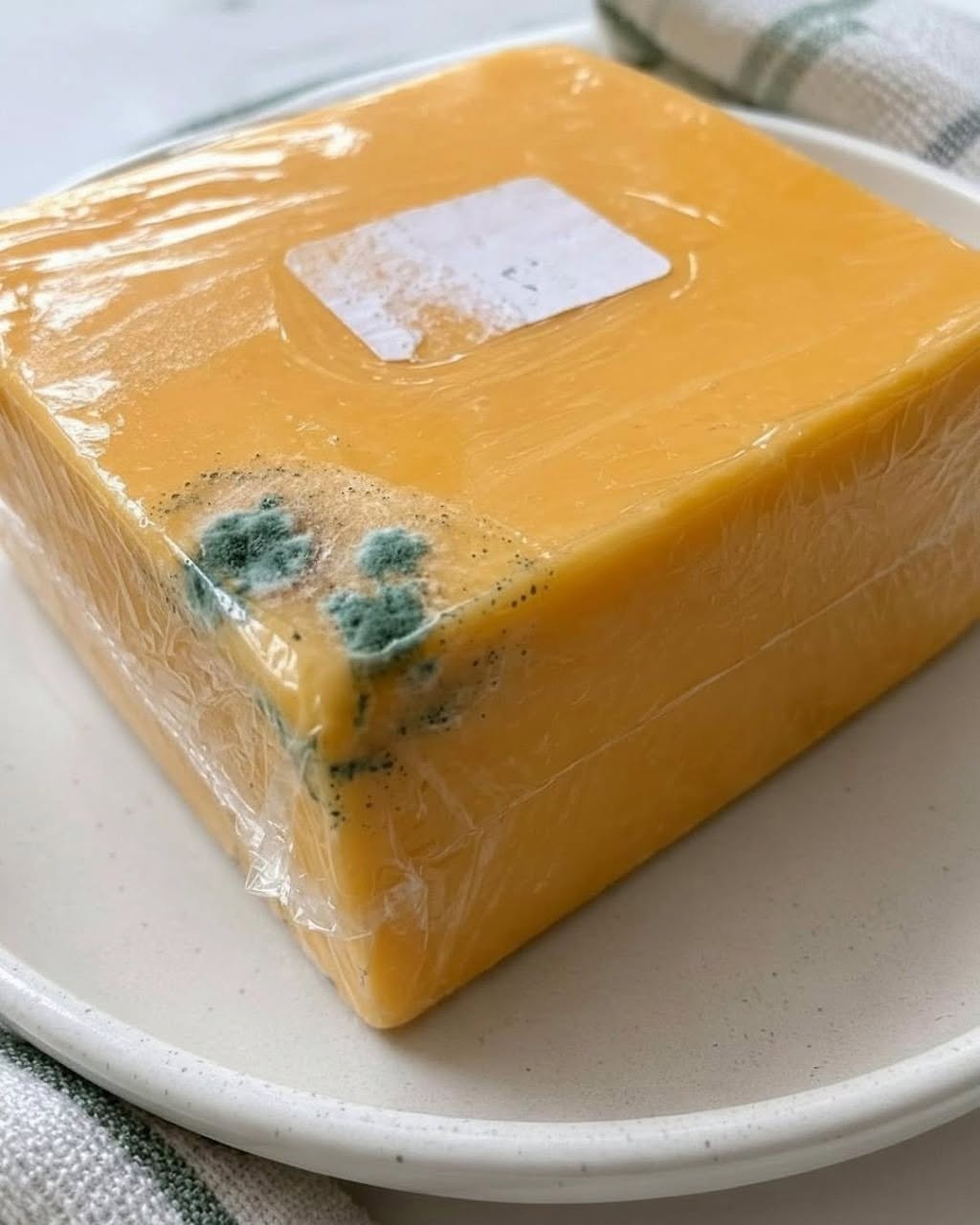
air, and time.
Does that mean it’s dangerous?
Not necessarily. For most healthy people, a small patch on a hard cheese isn’t a health emergency. The bigger concerns are:Allergies or sensitivities
Inhaling spores (rare, but worth noting)
Hidden contamination you can’t see
So no—don’t panic. But don’t ignore it either.
The Cheese Type Changes Everything
see continuation on next page;
Here’s where things get clearer—and stricter.
Cheese Type Structure Mold Behavior Verdict
Hard (cheddar, gouda, parmesan) Dense Stays on the surface Usually salvageable
Soft (brie, ricotta, cream cheese) High moisture Spreads invisibly inside Not salvageable
If this were brie? Different conversation—you’d toss it without hesitation.
But cheddar gives you a little wiggle room.
Inspect Before You Cut
Beforegrabbing a knife, pause for a quick 20-second check. It could save you from making the wrong call.
Look for:
Multiple mold spots (not great)
Unusual colors—black, pink, or orange (worse)
Spreading


