
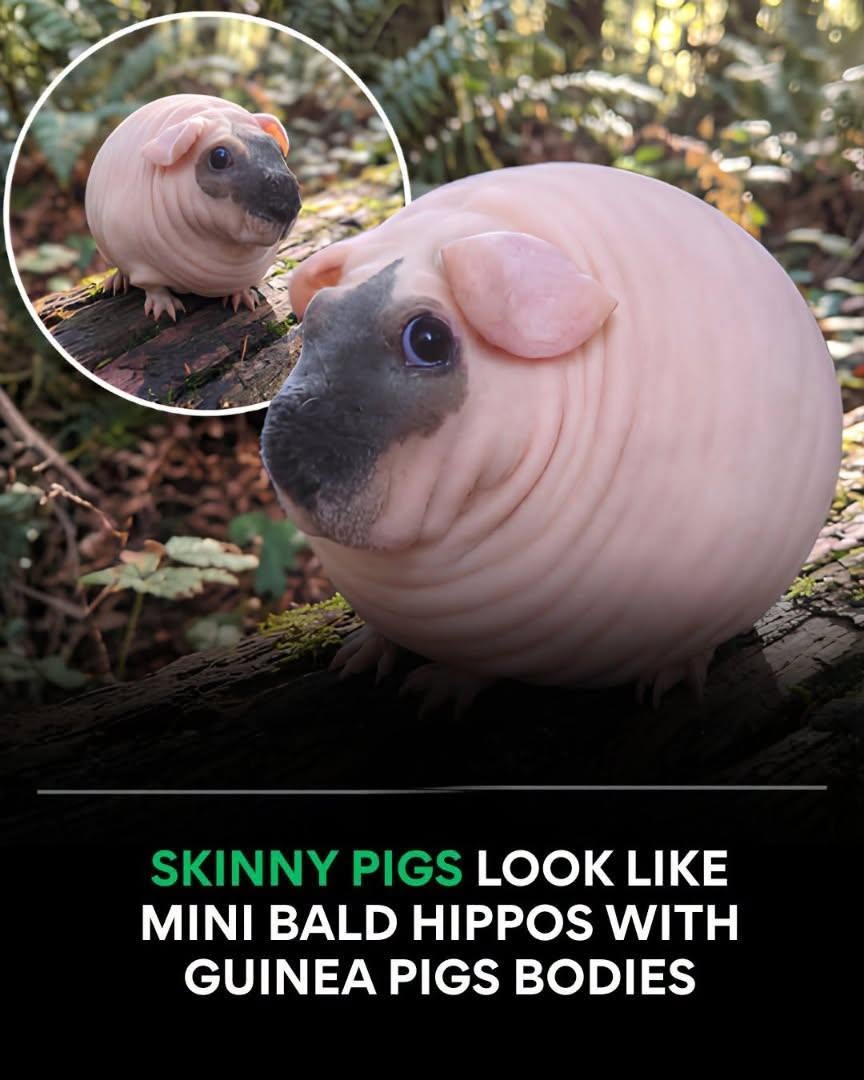
The reason is closely connected to their lack of insulation.
When an animal loses body heat more quickly, it may need to use more energy to maintain a stable internal temperature.
Food provides that energy.
A Skinny Pig therefore has greater nutritional demands than many people might expect from such a small animal.
This does not mean owners should simply place unlimited quantities of food in front of their pets.
Instead, their diets must be carefully balanced.
Hay should form the foundation of a healthy guinea pig diet.
It provides essential fiber and supports normal digestive function.
Fresh vegetables can provide additional nutrients, while an appropriate guinea pig pellet can help supply vitamins and minerals.
Vitamin C deserves particular attention.
Like humans, guinea pigs cannot produce their own vitamin C in sufficient quantities. They must obtain it through their diet.
An inadequate supply can lead to scurvy, a condition that can cause weakness, pain, poor wound healing and other serious health problems.


